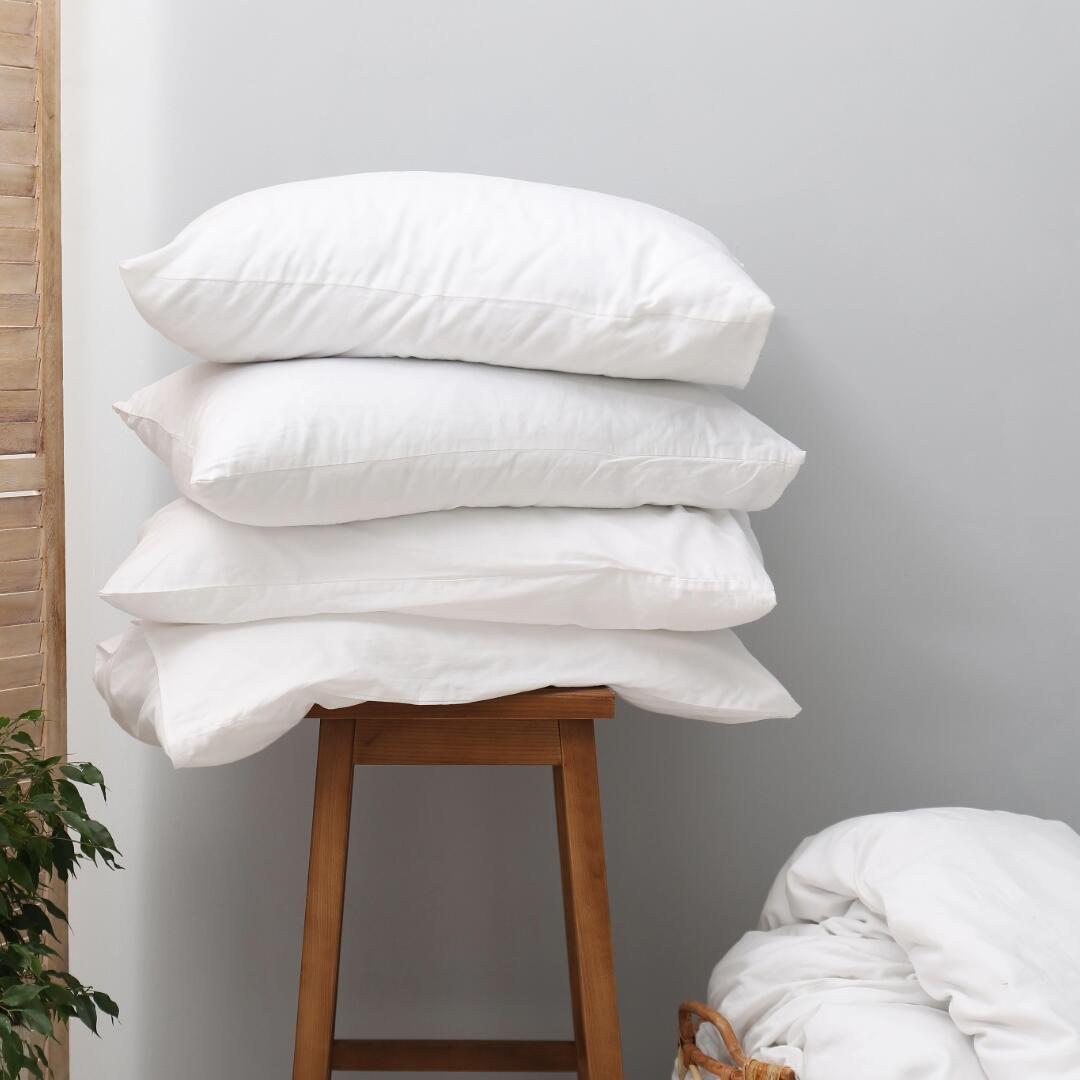
Finding the perfect pillow can be a challenge. With so many different fillings, shapes, heights and levels of firmness available, it can be difficult to know which pillow is right for you.
The right pillow is about more than softness or luxury. Your pillow should support your head and neck in a natural position, helping to keep your spine aligned while you sleep. Just as important as the pillow itself is your sleeping position, personal comfort preference and the type of filling you choose.
At The Bedroom Shop, we believe choosing the right pillow starts with asking the right questions. With over 25 years of experience in bedding and bedroom products, we understand that there is no single pillow that suits everyone.
Whether you are a side sleeper, back sleeper or stomach sleeper, this guide will help you understand what to look for when choosing your next pillow.
Why Choosing the Right Pillow Matters
We spend around a third of our lives in bed, so choosing the right pillow can make a significant difference to your comfort.
Your pillow should support your head and neck as though you were standing upright with good posture. Ideally, your head should remain in a neutral position rather than being pushed too far forward, tilted backwards or angled to one side.
A pillow that is too high can place unnecessary strain on the neck, while one that is too flat may not provide enough support. The correct height and firmness will depend largely on your sleeping position and your individual body shape.
The aim is simple: your pillow should support you without you having to think about it.
Your Sleeping Position Determines the Right Pillow
One of the easiest ways to narrow down your pillow choices is to consider how you sleep.
Side Sleepers
If you primarily sleep on your side, you will generally need more support than a back or stomach sleeper.
When lying on your side, there is a larger gap between your head and the mattress because of the width of your shoulders. A pillow with enough height and support can help fill this space and keep your head and neck more comfortably aligned.
A medium-firm to firm pillow is often a good starting point for side sleepers. Look for a pillow with enough loft and structure to prevent your head from dropping towards the mattress.
Your mattress firmness can also make a difference. A softer mattress allows your shoulder to sink further into the bed, which may mean you need a slightly lower pillow.
Back Sleepers
Back sleepers generally need a balance between support and softness.
A medium-firm pillow can provide enough support to keep the head and neck aligned while still allowing the head to settle comfortably into the pillow.
A pillow that is too high may push your head forward, while one that is too flat may not provide sufficient support.
Memory foam and quality down or feather pillows can all be good options for back sleepers, depending on the height and firmness you prefer.
Stomach Sleepers
If you sleep on your stomach, a soft, lower-profile pillow is usually the better choice.
A thick or firm pillow can lift your head too high and place your neck at an uncomfortable angle because your head is already turned to one side while sleeping on your stomach.
A softer pillow with less loft allows your head to remain closer to the mattress and can help reduce unnecessary strain on your neck.
Some stomach sleepers even prefer a very thin pillow or no pillow underneath their head, while using a soft pillow underneath their hips or lower abdomen for added comfort.

Choosing the Right Pillow Filling
Once you have considered your sleeping position, the next step is choosing the right filling.
Different pillow fillings offer different levels of support, softness, durability and breathability.
Down and Feather Pillows
Down and feather pillows are popular for their natural comfort and luxurious feel. However, there is an important difference between down and feather.
Down consists of soft clusters found underneath the outer feathers of birds. These clusters are lightweight and naturally trap air, creating loft and a soft, cushioned feel.
Feather, on the other hand, has a firmer structure and provides more support but can feel less plush.
A pillow with a higher down content will generally retain its loft better than a pillow containing a high proportion of harder feathers. The soft down clusters trap air, helping the pillow maintain its fullness and luxurious feel.
For those who enjoy the traditional feel of natural bedding, a quality down and feather pillow can provide an excellent combination of comfort and support.
Synthetic Fibre Pillows
Synthetic fibre pillows are an affordable and versatile option and are available in a variety of firmness levels.
They can be particularly appealing for guest bedrooms, holiday homes and everyday use.
One consideration is longevity. Synthetic fibre pillows can flatten or lose their shape more quickly than some higher-quality down, feather or memory foam pillows, depending on the quality and construction of the product.
If you prefer a pillow that feels plump and supportive night after night, consider the quality of the filling and construction rather than simply choosing the cheapest option.
Memory Foam Pillows
Memory foam pillows are designed to contour gently around the head and neck. They can be particularly suitable for side and back sleepers who prefer a more structured form of support.
Because memory foam retains its shape, it can provide consistent support throughout the night rather than becoming completely flattened underneath the weight of your head.
Contoured memory foam pillows can also be a good choice for sleepers looking for a more structured pillow that supports the natural curve of the neck.
Firmness Isn’t the Same as Quality
It is easy to assume that a firmer pillow is better, but that isn’t necessarily the case. The ideal firmness depends on your sleeping position, body shape and personal preference.
A side sleeper may require a firmer, higher pillow to provide adequate support, while a stomach sleeper may be much more comfortable with a soft, low-profile pillow.
The quality of the filling also matters. A well-made soft pillow can provide excellent support, while a poor-quality firm pillow may simply feel hard and uncomfortable.
Rather than asking, “Which pillow is the best?”, ask:
“Which pillow is best for the way I sleep?”
How Often Should You Replace Your Pillow?
As a general guideline, pillows should be replaced approximately every two years, although this can vary depending on the type and quality of the pillow, how often it is used and how well it is cared for.
Some pillows will naturally wear faster than others.
Synthetic fibre pillows, for example, may lose their shape relatively quickly, while quality down, latex and memory foam pillows can retain their structure for longer when properly cared for.
Your pillow may be ready for replacement if:
It no longer returns to its original shape.
It has become noticeably flatter or lumpy.
You have to fold or double it over to get comfortable.
The filling has become uneven.
The pillow no longer provides the support it once did.
It has developed a persistent odour.
It shows visible signs of wear or deterioration.
A simple test is to fold your pillow in half and see whether it springs back into shape. If it remains flat or takes a long time to recover, it may be time for a replacement.
Don’t Forget Your Pillow Protector
One of the simplest ways to extend the life of your pillow is to use a quality pillow protector.
Your pillow is in direct contact with your head and face every night, making a pillow protector an important part of your bedding.
A pillow protector creates an additional barrier between your pillow and everyday moisture, perspiration, oils and general wear. It can also help keep the pillow cleaner and protect the filling over time.
Ideally, your pillow protector should be washed regularly according to the manufacturer’s care instructions, while the pillow itself should be cleaned according to its specific filling and care requirements.
Always check the care label before washing a pillow. Some pillows can be machine washed, while others, particularly certain natural fillings, may require professional cleaning.
Quality Matters When Choosing a Pillow
When choosing a new pillow, don’t simply look at the price or the firmness. Consider:
Your sleeping position: Are you primarily a side, back or stomach sleeper?
Pillow height: Does the pillow provide enough support without pushing your head too high?
Filling: Do you prefer the natural softness of down, the support of feather, the resilience of latex or the contouring feel of memory foam?
Firmness: Do you prefer a soft, medium or firmer pillow?
Durability: Will the pillow retain its shape and support over time?
Care: Can the pillow be cleaned easily and will you use a pillow protector?
A quality pillow is an investment in your sleep environment, and finding the right one can make your entire bed feel more comfortable.
Find Your Perfect Pillow at The Bedroom Shop
At The Bedroom Shop, we know that choosing bedding isn’t simply about choosing what looks beautiful. It is about understanding what works for you.
With over 25 years of experience in the bedding industry, we know the right questions to ask — from how you sleep and the level of support you prefer, to the type of filling and feel you are looking for.
Our range of pillows includes options designed for different sleeping positions, comfort preferences and budgets, from natural feather and down fillings to supportive and practical alternatives.
We also recommend pairing your pillow with a quality pillow protector to help maintain its freshness and extend its lifespan.
Whether you are refreshing your own bedroom, furnishing a guest room, preparing a holiday home or creating a luxurious hotel-style bed, choosing the right pillow is an important part of creating a comfortable night’s sleep.
Because the perfect pillow isn’t necessarily the softest or firmest one — it’s the one that gives you the right support, comfort and feel for the way you sleep.
Frequently Asked Questions
How do I choose the right pillow?
Start with your sleeping position. Side sleepers generally need more height and support, back sleepers often prefer medium support, while stomach sleepers typically benefit from a softer, lower-profile pillow.
Is a firm pillow better for side sleepers?
Side sleepers generally need more support because of the space between the head and mattress created by the shoulders. A medium-firm to firm pillow can help maintain a more neutral head and neck position.
What pillow is best for stomach sleepers?
A soft, low-profile pillow is generally more comfortable for stomach sleepers because it keeps the head closer to the mattress and can reduce the amount the neck has to bend.
Are down pillows better than feather pillows?
They offer different feels. Down is softer and loftier, while feather provides more structure and firmness. A quality blend of down and feather can provide a balance of softness and support.
How long should a pillow last?
As a general guideline, pillows should be replaced approximately every two years, although lifespan varies according to the filling, quality, frequency of use and care.
Do I need a pillow protector?
A pillow protector is highly recommended. It provides an additional layer of protection against everyday moisture, oils and general wear and can help keep your pillow fresher for longer.
Can I wash my pillow?
This depends on the filling and construction. Always follow the manufacturer’s care instructions. Some pillows are machine washable, while others require specialist or professional cleaning.